How Much Does a Baby Cost the First Year? Building a Baby Budget
Published November 18, 2026
How much does a baby cost the first year? There is no single number. Published estimates vary widely by location, child care, health coverage, and the choices you make, so a better question is: what will your costs look like, and how do you plan for them? This guide breaks the first year into categories you can price out yourself.
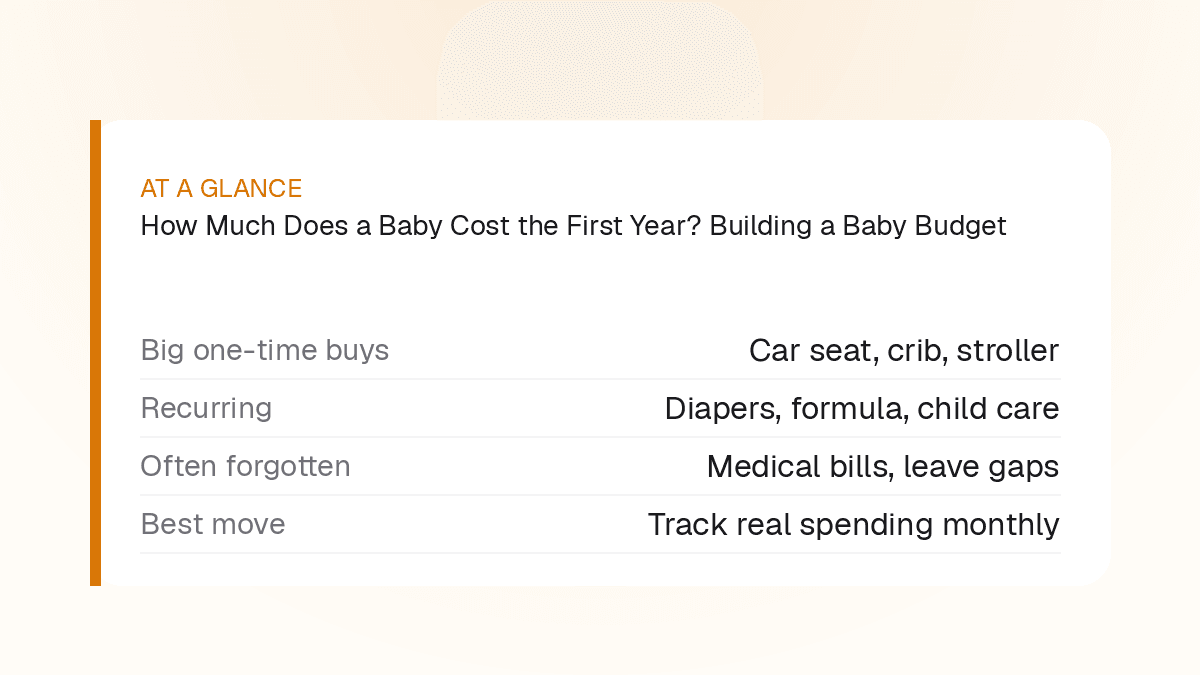
The three buckets of baby costs
1. One-time purchases
These come before or soon after birth: a car seat, a safe sleep space, a stroller, a carrier, clothing, and feeding gear. Many parents overbuy. Our baby registry checklist separates the essentials from the nice-to-haves, and secondhand or gifted items can cut this bucket a lot (though check current safety guidance and recalls for car seats and cribs).
2. Recurring monthly costs
- Diapers and wipes: a steady, predictable expense for the whole year.
- Food: formula if you use it, and later solid foods.
- Child care: often the largest line item by far, and it varies hugely by area. See daycare waitlists for why to start early.
- Health coverage: premiums may rise when you add a dependent.
3. Costs people forget
Out-of-pocket medical costs for delivery and well-baby care, a gap in income during unpaid leave, higher utility bills, and the occasional urgent purchase at 2 a.m. all add up. Budget a cushion rather than assuming everything goes to plan.
How to build your own baby budget
- Start with your income during leave. Check what your employer and state provide. Our parental leave paperwork guide explains the forms.
- Price your insurance. Look at your plan's deductible and out-of-pocket maximum, which cap what you may owe in a year. See adding a newborn to insurance.
- List recurring costs monthly and multiply by 12, then add one-time purchases.
- Add a buffer for the unexpected, and revisit the numbers every month.
Check the official sources
Ways families commonly save
- Accept hand-me-downs and borrow big items, then buy new only what must be new.
- Ask for practical registry items like diapers and gift cards toward child care.
- Compare child care options early, including family help or employer benefits.
- Use available benefits: see WIC eligibility and Medicaid and CHIP.
- Freeze meals before the birth: our freezer meal plan helps cut takeout.
Track it once the baby arrives
Your estimates will be wrong in places, and that is fine. For the first few months, note what you actually spend by category, then adjust. Real numbers beat any national average. Keeping receipts and insurance paperwork organized also makes bills and reimbursements easier to sort out later.
Key takeaways
- No national average fits everyone; build a budget from your own costs, coverage, and child care.
- Sort costs into one-time purchases, recurring expenses, and the easy-to-forget ones.
- Child care and income during leave are often the biggest swings, so research them early.
- Confirm benefits and tax details with official sources or a professional, and add a buffer.
FirstDays keeps your deadlines, paperwork, and reminders in one place, tailored to your state (see the state guides). Start free.
Get your personalized checklist — free
FirstDays builds a deadline-aware checklist for your state, reminds you before every window closes, and drafts the letters and forms for you. Free to start.
Build my checklist →