Well-Child Visit Schedule for Baby's First Year
Published November 15, 2026
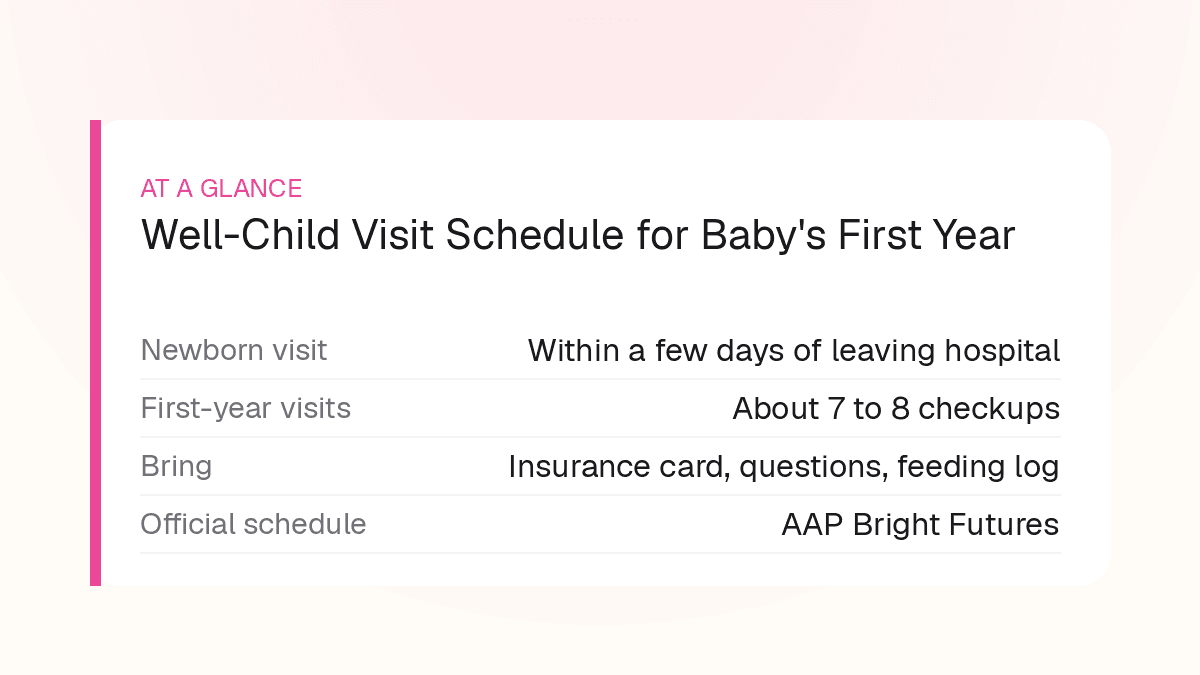
The well-child visit schedulefor a baby's first year is busier than most new parents expect. Pediatric practices commonly follow the American Academy of Pediatrics (AAP) Bright Futures guidelines, which call for a first visit within days of leaving the hospital and then checkups at roughly 1, 2, 4, 6, 9 and 12 months. Your own pediatrician may adjust the timing, so treat this as a general guide, not a prescription.
The typical first-year timeline
- Newborn visit (about 3 to 5 days old). Often within a couple of days of discharge, and sooner for some babies. Weight, feeding, jaundice and the newborn screening follow-up are common topics.
- 1 month. Growth, feeding, sleep and checking in on how you are recovering.
- 2 months. The first big round of routine vaccines is commonly given here.
- 4 months. Growth and development check, with a further round of vaccines.
- 6 months. Growth, development, a conversation about starting solid foods, and more vaccines.
- 9 months. A developmental screening is common at this age.
- 12 months. A full checkup, plus vaccines and talk about the transition to toddlerhood.
Official source
What happens at a well-child visit
These are preventive visits, not sick visits. Expect the nurse or doctor to measure weight, length and head circumference and plot them on a growth chart. The clinician will do a physical exam, ask about feeding, sleep and diapers, and watch how your baby moves and responds. Most visits include a developmental check and time for your questions. Vaccines are scheduled at several of the visits.
Your own wellbeing counts too
Pediatricians often ask how parents are coping, including mood and sleep. It is a normal part of the visit, and a good moment to mention anything that worries you. Your own postpartum care happens separately with your OB-GYN or midwife.
How to prepare for each appointment
- Book ahead. Schedule the next visit before you leave, since popular slots fill fast. If you have not picked a doctor yet, see how to choose a pediatrician.
- Bring the basics. Insurance card, photo ID, and any hospital discharge papers at the first visit.
- Track a few things. A rough log of feedings, wet diapers and sleep helps, especially in the early weeks.
- Write down questions. Sleep-deprived memory is unreliable. Keep a running note on your phone.
- Bring a second set of ears. A partner or family member can help remember advice.
Insurance and paperwork basics
Under the Affordable Care Act, many plans cover recommended preventive care for children, including well-child visits and routine vaccines, without cost sharing when you use an in-network provider. Details depend on your plan, so confirm with your insurer. Your baby needs their own coverage to be billed correctly, so see our guide to adding a newborn to health insurance and, if you may qualify, Medicaid or CHIP.
Keep records in one place
When not to wait for the next checkup
Well-child visits do not replace urgent care. Call your pediatrician or follow their after-hours instructions if you are worried about fever in a young infant, trouble breathing, poor feeding or unusual sleepiness. In an emergency, call 911. Your pediatrician can tell you which symptoms warrant a same-day call.
Key takeaways
- Expect a visit within days of leaving the hospital, then about 1, 2, 4, 6, 9 and 12 months.
- Pediatric practices commonly follow AAP Bright Futures; your doctor sets your baby's exact plan.
- Preventive visits are generally covered under many plans, but confirm network and cost details.
- Bring your insurance card, a feeding log and written questions to every visit.
FirstDays turns the newborn to-do list into a personalized checklist with reminders. Browse the state guides or start free.
Get your personalized checklist — free
FirstDays builds a deadline-aware checklist for your state, reminds you before every window closes, and drafts the letters and forms for you. Free to start.
Build my checklist →