Acknowledgment of Paternity: A Guide for Unmarried Parents
Published November 16, 2026
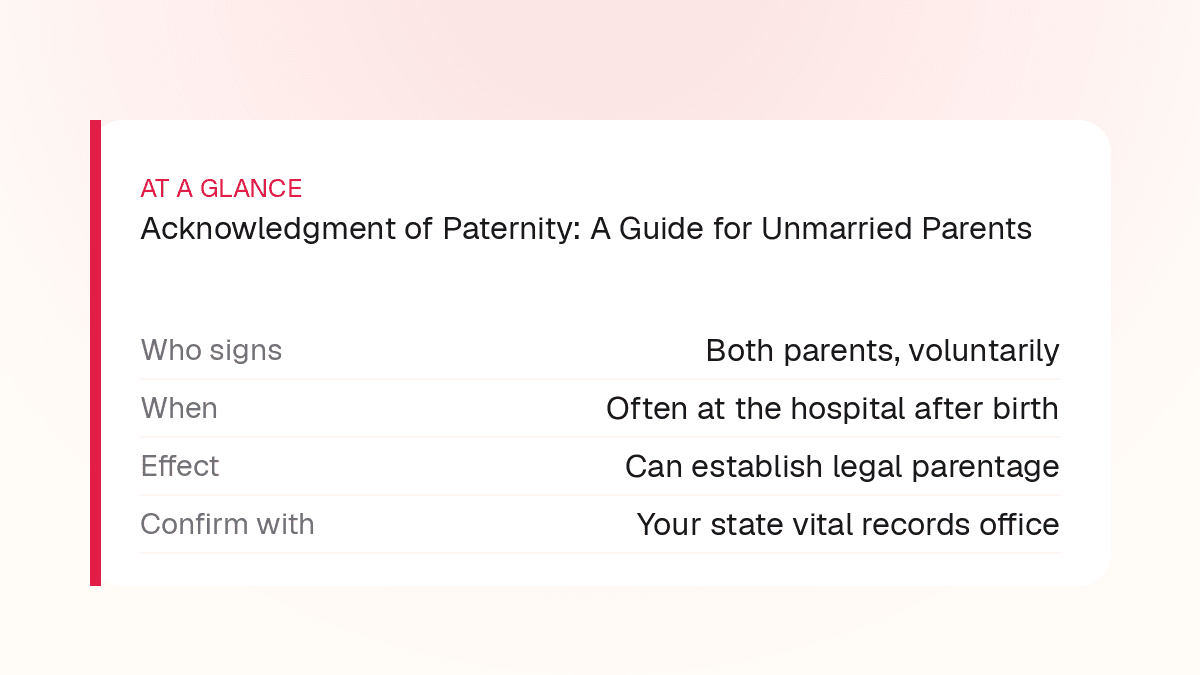
An acknowledgment of paternity(often called a VAP, or voluntary acknowledgment of paternity) is a form that unmarried parents can sign to state who a baby's legal father is. It is one of the first pieces of paperwork many unmarried couples meet in the hospital, and it is worth understanding before you sign. This is general information, not legal advice.
What the form does
When parents are married, many states presume the husband is the child's legal parent. When parents are not married, that presumption usually doesn't apply, so legal fatherhood has to be established another way. Signing an acknowledgment of paternity is the simplest route in most states: both parents state, usually under penalty of perjury, that the man named is the biological father.
Once properly signed and filed, the acknowledgment generally has the force of a legal finding of parentage in many states. That can matter for things like child support, custody and visitation, health insurance, inheritance, and eligibility for certain benefits. The details vary, so check your state's rules.
When and where unmarried parents sign
- At the hospital. Most birthing hospitals offer the form shortly after delivery, often handed over by a birth registrar along with the birth certificate worksheet.
- After you go home. Many states let you sign later through the state vital records office, a local health department, or a child support agency.
- Before birth. A few states allow it during pregnancy; most do not.
Both parents typically need photo ID, and signatures are often witnessed or notarized. Some states have a short rescission window, commonly measured in days, during which a parent can withdraw the acknowledgment. After that, challenging it can be difficult, so don't sign under pressure.
Not sure the father is the biological father?
How it connects to the birth certificate
For unmarried parents, a father's name is commonly added to the birth certificate only if both parents sign the acknowledgment (or a court orders it). If it isn't signed at the hospital, the certificate may list only the mother, and you may need to amend it later through your state vital records office. Plan the spelling of names carefully, because corrections can take time. See our guides to getting your newborn's birth certificate and replacing or correcting a birth certificate.
The birth certificate then feeds into the rest of your newborn paperwork, including the Social Security card (see how it works) and adding your baby to health insurance.
Questions to ask before you sign
What are the legal effects in my state?
Rules about child support, custody, and parental rights differ by state. Signing generally creates both rights and responsibilities. A family-law attorney or legal aid office can explain how your state treats it.
Can I change my mind?
Ask about the rescission period and about what happens if circumstances change. Ask for a copy of everything you sign.
Does this replace a custody or support order?
Usually not. The acknowledgment establishes parentage; it doesn't by itself set a parenting schedule or support amount. Those are typically handled separately by a court or agency.
Official sources
Keep your paperwork together
Store a copy of the signed acknowledgment with the birth certificate and other key documents; you may need it for benefits, school enrollment, or a passport application (see the baby passport guide, which has its own rules about parental consent). Our state guides point to the right office for where you live.
Key takeaways
- An acknowledgment of paternity is a voluntary form that can establish legal fatherhood for unmarried parents.
- It is often offered at the hospital, but many states let you sign later.
- It usually determines whether a father is listed on the birth certificate for unmarried parents.
- It has legal effects and a limited window to withdraw, so ask questions and consult an attorney or your state agency first.
FirstDays turns the newborn paperwork maze, from the birth certificate to insurance, into a personalized checklist for your state. Start free.
Get your personalized checklist — free
FirstDays builds a deadline-aware checklist for your state, reminds you before every window closes, and drafts the letters and forms for you. Free to start.
Build my checklist →