Freezer Meals and Postpartum Prep: The Two-Week Plan
Published November 17, 2026
Freezer meals and postpartum prep are about one thing: making sure that in the first two weeks home with a newborn, dinner is a matter of reheating, not deciding. Cooking is often the last thing on your mind when you are feeding a baby around the clock, so a little planning in the third trimester pays off quickly.
How many meals do you actually need?
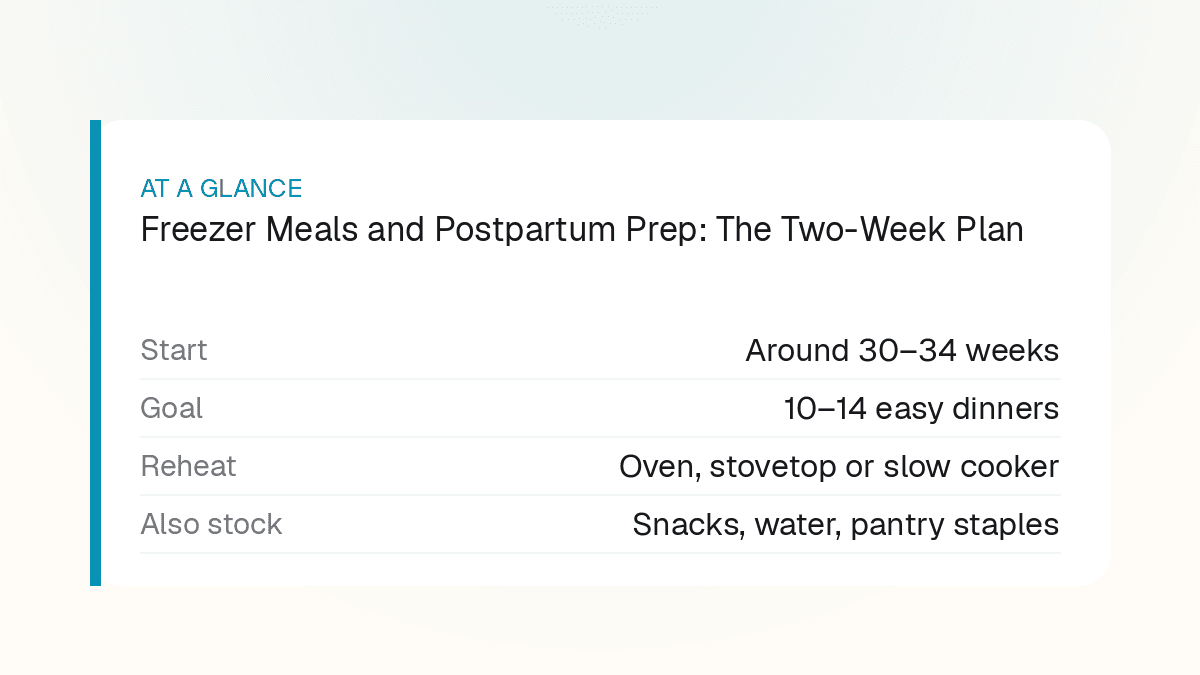
A common goal is enough dinners to cover about two weeks, roughly 10 to 14, plus a handful of breakfasts and lunches. You do not need to hit that number. Even five or six meals in the freezer remove a lot of pressure, especially in the first few days. Count on others too: friends and family may bring food, so see our guide to things to do before baby arrives for organizing help.
A simple timeline
Weeks 30–32: plan and shop
Pick recipes that freeze well and that you already like. Good candidates include soups, stews, chili, lasagna, enchiladas, meatballs, burritos, casseroles, and pasta sauces. Check what you have room for: measure your freezer, and buy freezer-safe containers, zip bags, foil pans, and a marker for labels.
Weeks 33–35: cook in batches
Double a recipe you are making anyway and freeze half. Cook one batch session per weekend rather than a marathon. Cool food promptly, portion it into flat bags or containers, and label each with the dish, date, and reheating instructions so a partner or helper can do it without asking you.
Weeks 36+: stock the pantry and finish up
Round things out with easy extras: snacks you can eat one-handed (nuts, granola bars, fruit, cheese), a good supply of water bottles, oatmeal, eggs, frozen vegetables, and pantry staples. Move on to your hospital bag if you have not packed it yet.
Food safety: use the official source
What freezes well (and what doesn't)
- Freezes well: soups, chili, braises, meatballs, baked pastas, burritos, and muffins or pancakes for breakfast.
- Often disappoints: cream-heavy sauces that separate, fried foods that go soggy, and raw salad vegetables.
- Tip: freeze in flat, thin portions so they thaw faster and stack neatly.
Beyond food: other postpartum prep
Meals are only part of the picture. Many parents also set up a postpartum station with water, snacks, and supplies in the spots where they will feed the baby, ask a friend or relative to coordinate a meal or help schedule, and line up a few paid or unpaid helpers for laundry and errands. Your own recovery matters too: your provider will explain what to expect and when to call, and a postpartum checkup is where you can ask questions. If you will have time off, our guide to parental leave paperwork covers the forms.
Key takeaways
- Aim for roughly 10–14 freezer dinners, but even a handful of meals helps a lot.
- Start around 30–34 weeks, cook in batches, and label everything with the date and reheating steps.
- Follow USDA guidance for safe thawing, reheating, and storage rather than guessing.
- Pair meals with snacks, pantry staples, and a simple help plan for the first weeks.
Freezer meals are one piece of getting ready. FirstDays keeps the rest of the to-do list, paperwork, deadlines, and reminders, in one place, tailored to your state (see the state guides). Start free.
Get your personalized checklist — free
FirstDays builds a deadline-aware checklist for your state, reminds you before every window closes, and drafts the letters and forms for you. Free to start.
Build my checklist →