WIC for New Parents: Eligibility and How to Apply
Published November 6, 2026
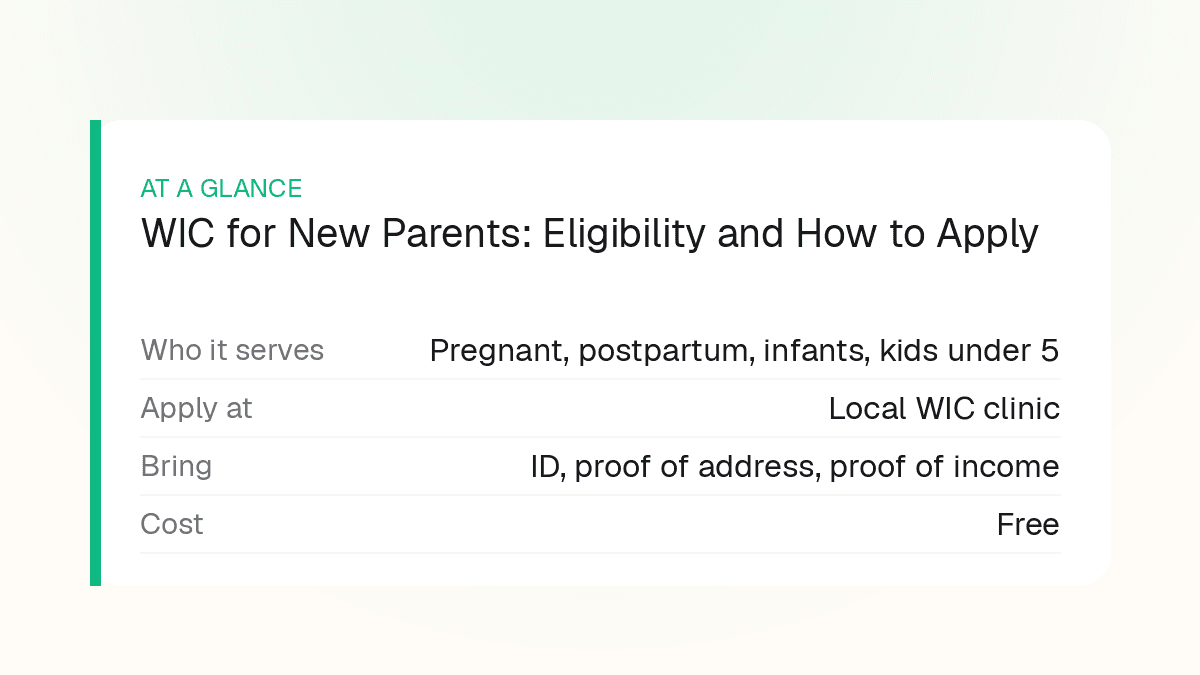
WIC(the Special Supplemental Nutrition Program for Women, Infants, and Children) is a federal nutrition program that helps pregnant, postpartum, and breastfeeding parents, plus babies and children up to age 5, with healthy food, nutrition education, and health referrals. If you're expecting or just had a baby, here is who can qualify, what WIC provides, and how to apply.
Who is eligible for WIC?
WIC is run by the U.S. Department of Agriculture (USDA) and administered by each state, so details vary slightly by location. In general, you must meet four kinds of requirements:
- Category: pregnant, postpartum (up to 6 months after birth or pregnancy ending), breastfeeding (up to the baby's first birthday), an infant, or a child up to age 5.
- Residency: you live in the state where you apply. You don't need to be a U.S. citizen to qualify.
- Income: household income at or below a limit set by your state (commonly tied to 185% of the federal poverty level). Families already receiving SNAP, Medicaid, or TANF are often considered income-eligible automatically.
- Nutrition risk: a health professional at the WIC clinic (or your provider) determines this during a brief, free screening. It is common and can be something as simple as needing more nutritious foods.
Check the official limits
What WIC provides
- Healthy foods: a monthly benefit loaded onto a card for items such as fruits and vegetables, whole grains, milk, eggs, and infant cereal. Infant formula is available if you don't exclusively breastfeed.
- Breastfeeding support: counseling, peer helpers, and in many clinics breast pumps.
- Nutrition education: one-on-one or group guidance on feeding your baby and yourself.
- Referrals: connections to health care, immunization, and other community services.
How to apply for WIC, step by step
1. Find your local WIC office
Search for your state's WIC agency, or call your local health department. Many states let you start an application or book an appointment online or by phone.
2. Gather your documents
- Identity for the applicant (and the child, if applying for them).
- Proof of address, such as a utility bill or lease.
- Proof of income, such as recent pay stubs, or proof you receive SNAP, Medicaid, or TANF.
- Proof of pregnancy if requested, and your baby's birth record once born.
3. Attend your appointment
A staff member reviews your paperwork and does a short health screening, which may include height, weight, and a simple iron check. Many clinics now offer phone or video visits.
4. Receive and use your benefits
If approved, you get a benefits card and a list of eligible foods, and you'll return periodically (often every few months) to recertify.
Apply during pregnancy
Common questions
Can I have WIC and other benefits at once?
Yes. WIC is separate from SNAP and Medicaid, and many families use several programs together. If your baby may qualify for health coverage, read about adding a newborn to Medicaid or CHIP.
Does WIC affect immigration status?
WIC rules are set by USDA and your state, and policies can change. For questions about your personal situation, ask the WIC clinic or a qualified immigration professional.
What if I'm denied?
You have the right to a written explanation and to request a fair hearing. Your situation can also change, so you can reapply later if your income or household changes.
Key takeaways
- WIC serves pregnant, postpartum and breastfeeding parents, infants, and children under 5.
- Eligibility depends on category, residency, income, and nutrition risk — confirm current limits with your state WIC agency.
- Bring ID, proof of address, and proof of income to your appointment.
- You can apply while pregnant, so benefits can begin before the baby arrives.
WIC is one of many programs and forms that come with a new baby. FirstDays builds your full new-baby checklist — benefits, birth certificate, Social Security number, insurance and more — with reminders before every deadline, tailored to your state (see the state guides). Start free.
Get your personalized checklist — free
FirstDays builds a deadline-aware checklist for your state, reminds you before every window closes, and drafts the letters and forms for you. Free to start.
Build my checklist →