Baby Registry Checklist: What You Actually Need (and What to Skip)
Published November 6, 2026
A baby registry checklistcan feel endless: stores hand you scanners and lists with hundreds of items, and almost everything is labeled a "must-have." The truth is that a newborn needs surprisingly little. This guide sorts a registry into the true essentials, the nice-to-haves, and the things you can safely skip or buy later.
When to start your registry
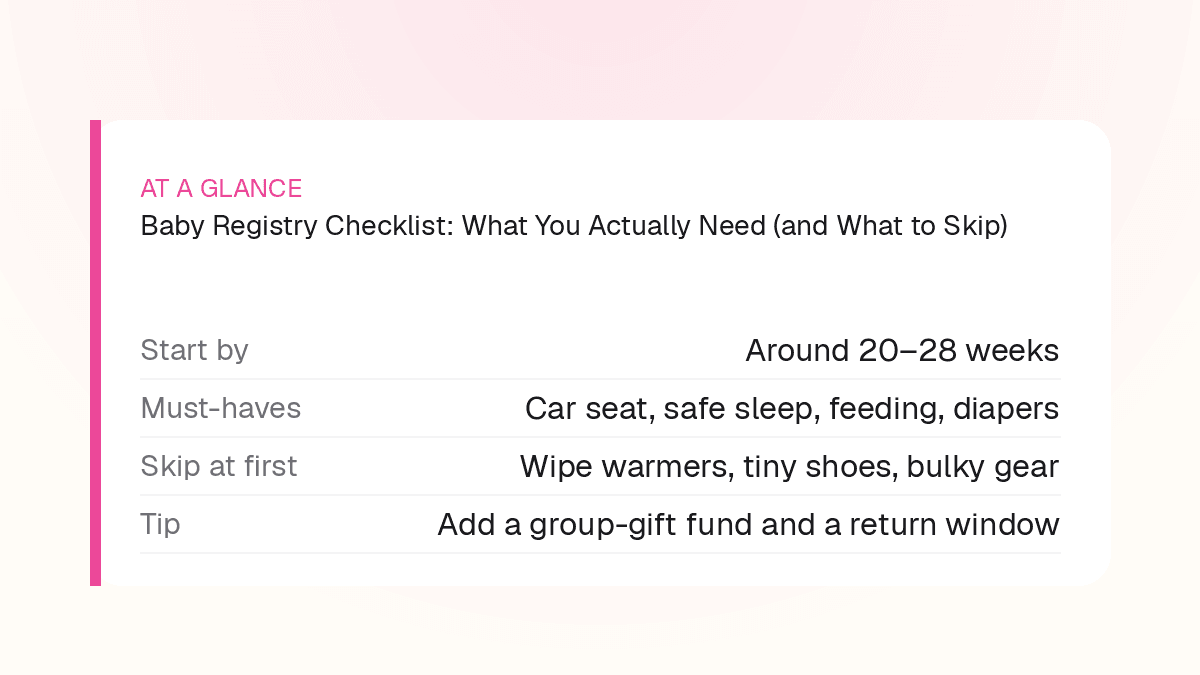
Many parents create their registry in the second trimester, often around 20–28 weeks, which leaves time to research bigger items and gives friends and family time to shop. There is no deadline, though: you can keep adding items after the baby arrives, once you know what you actually use. If you plan a shower, share the registry link with the host a few weeks ahead.
The essentials to register for
Safe sleep
- A bassinet or crib with a firm, flat mattress and fitted sheets (buy two or three).
- Wearable blankets or sleep sacks instead of loose blankets.
Follow the official safe-sleep guidance
Feeding
- Burp cloths and bibs, plus a handful of bottles even if you plan to nurse.
- Nursing pillow, nursing bras, and a breast pump if you plan to use one. Many insurance plans cover a pump, so check before buying.
- Formula only after talking with your pediatrician about what suits your baby.
Diapering and clothing
- Newborn and size 1 diapers (don't overbuy newborn size), wipes, and diaper cream.
- A changing pad and a diaper pail or bin.
- 6–8 simple onesies and sleepers in newborn and 0–3 months sizes, with zippers rather than snaps if you can.
Travel and health
- An infant car seat, installed before the due date. See our hospital bag checklist for what to have ready.
- A stroller or carrier that works for how you actually live.
- A digital thermometer, nail clippers, and a basic first-aid kit.
What to skip or buy later
- Wipe warmers, bottle sterilizer gadgets, and shoe collections. Rarely used.
- Lots of newborn-size clothing. Babies outgrow it within weeks.
- Toys. A newborn doesn't need them yet; wait for the 3–6 month stage.
- Big furniture sets. Start with a bassinet and add pieces once you know your space.
Registry tips that save money and stress
- Check return and completion policies. Many stores offer a registry completion discount and extended returns, but terms vary, so read the details.
- Add a group-gift or cash fund for big-ticket items like the stroller or car seat.
- Mix price points so guests with any budget can contribute.
- Register at more than one retailer if you want flexibility, and keep a single link to share.
- Think about paperwork-adjacent gifts: a fireproof folder for your baby's documents is cheap and useful. See our newborn paperwork checklist.
Key takeaways
- Start your registry in the second trimester, but keep editing after the baby arrives.
- Prioritize safe sleep, feeding, diapering, and a properly installed car seat.
- Skip novelty gadgets and don't overbuy newborn-size clothes.
- Check official safety sources (AAP, CPSC) and return policies before you buy.
A registry covers the stuff; FirstDays covers the paperwork that follows the birth: birth certificate, Social Security number, insurance, and more, with reminders before every deadline. Browse the state guides or start free.
Get your personalized checklist — free
FirstDays builds a deadline-aware checklist for your state, reminds you before every window closes, and drafts the letters and forms for you. Free to start.
Build my checklist →