Childbirth and Newborn-Care Classes: Which to Take and When
Published November 20, 2026
Childbirth classes and newborn-care classes help you walk into delivery and the first weeks at home knowing what to expect. You do not need to take every class on offer, but a few are widely considered worth the time. This guide covers the common types, when to book, and how to keep the cost down.
The classes new parents commonly take
- Childbirth preparation. Covers the stages of labor, what to expect at the hospital or birth center, comfort and pain-relief options, and when to head in. Some courses focus on a specific method; others are general.
- Newborn care. Diapering, bathing, swaddling, umbilical cord care, temperature basics and soothing. Especially useful for first-time parents.
- Breastfeeding or infant feeding. Latching, supply, pumping and bottle feeding. Many hospitals and lactation consultants offer them.
- Infant CPR and choking response. Hands-on practice with a certified instructor. Many parents also encourage grandparents and caregivers to attend.
- Safe sleep and car seat sessions. Short sessions that go over current guidance from the American Academy of Pediatrics (AAP) and how to install a car seat correctly.
- Partner or support-person classes. Practical roles during labor and in the first weeks, often combined with the classes above.
Official source
When to sign up and take them
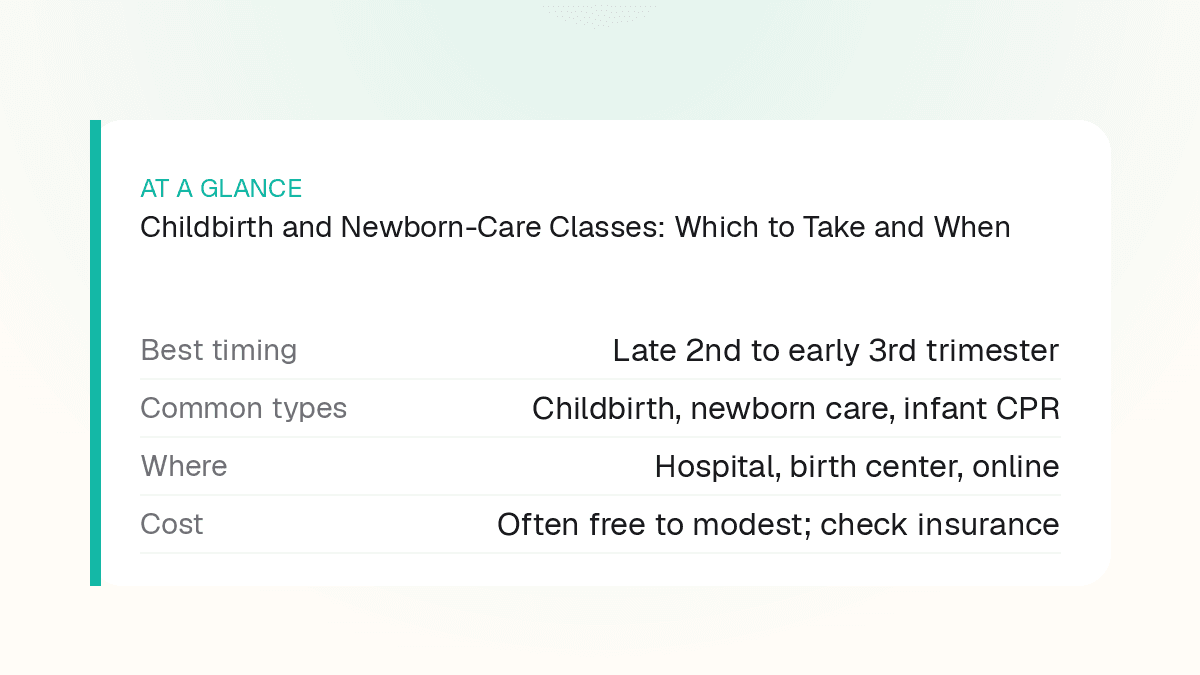
Popular classes fill up and many are held on a fixed multi-week schedule. A common approach is to book during the second trimester and finish the childbirth course by about 34 to 36 weeks, since babies sometimes arrive early. Newborn-care, CPR and feeding sessions are often single evenings or weekend mornings that fit anywhere from the late second trimester on. If you are expecting twins or have a high-risk pregnancy, ask your provider whether to start sooner.
A simple timeline
- Second trimester: research options, ask your hospital, check insurance, book the childbirth series.
- Early third trimester: take newborn care and feeding classes.
- By 34 to 36 weeks: finish childbirth prep and CPR, and tour your delivery location. See our guide to pre-registering at the hospital.
Where to find classes and what they cost
Start with the hospital or birth center where you plan to deliver. Many run their own classes, which can also familiarize you with their policies. Other sources include independent childbirth educators, doulas, community health departments, local nonprofits, and online courses you can take at home. Prices range widely, from free or sliding-scale community options to a few hundred dollars for a private series.
- Ask your insurer. Some plans reimburse or discount prenatal classes. Coverage varies, so call the number on your card.
- Check employer benefits. Some employers and wellness programs offer a stipend.
- Ask about assistance. Programs such as WIC often include breastfeeding support, and health departments sometimes offer free classes.
- Compare formats. In-person classes offer hands-on practice; online classes are flexible. Many parents mix both.
Choose an instructor you trust
Getting the most out of a class
Bring your partner or support person, write down questions for your provider, and treat the class as a way to rehearse, not a script. Pair what you learn with a written plan: our guide to writing a birth plan pairs well with a childbirth course, and the hospital bag checklist helps you finish getting ready. Keep the class certificates and any handouts with your other paperwork, and tick the classes off your checklist in the FirstDays state guides.
Key takeaways
- A childbirth course, a newborn-care session and infant CPR are the most commonly recommended classes.
- Book in the second trimester and aim to finish by about 34 to 36 weeks.
- Start with your hospital, then check insurance, employer benefits and community programs for lower-cost options.
- Classes supplement, not replace, advice from your own provider.
FirstDays turns the before-and-after-birth to-do list into a personalized checklist with reminders, so nothing slips. Start free and get your plan.
Get your personalized checklist — free
FirstDays builds a deadline-aware checklist for your state, reminds you before every window closes, and drafts the letters and forms for you. Free to start.
Build my checklist →