Newborn Screening Tests Explained: The Heel-Prick Panel
Published November 19, 2026

Newborn screening testsare a set of quick checks, done in the first days of life, that look for rare but serious conditions that may not show any signs at birth. The best known is the heel-prick blood test, but most states also screen your baby's hearing and heart. Here is what to expect, so none of it catches you off guard in the hospital.
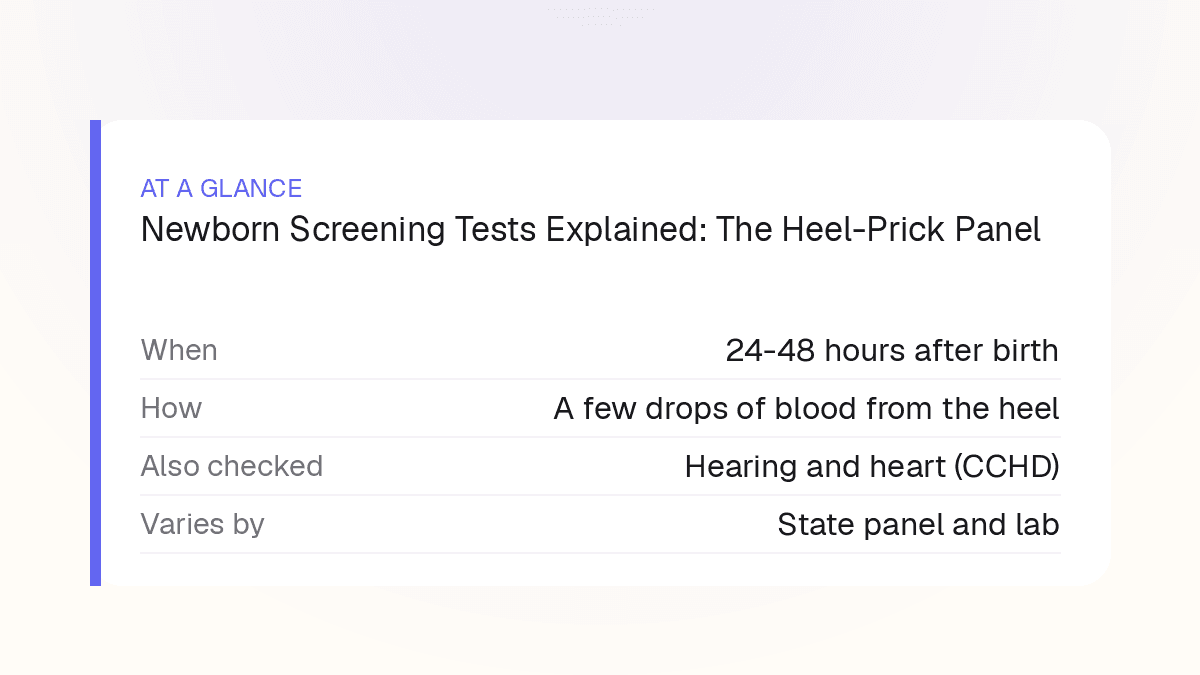
The three main newborn screens
1. The heel-prick blood test
A nurse pricks your baby's heel, usually somewhere between 24 and 48 hours after birth, and collects a few drops of blood on a special paper card. The card goes to a state public health lab, which tests for a panel of conditions, such as certain metabolic, hormone, blood, and genetic disorders. Early detection matters because many of these conditions can be managed or treated well when caught in the first weeks.
2. The hearing screen
This is a painless check, often done while your baby sleeps, using soft earphones or small sensors that measure how the ears respond to sound. It is usually done before you leave the hospital.
3. Critical congenital heart disease (CCHD) screening
A small sensor on the skin, similar to a bandage, measures oxygen levels in the blood (pulse oximetry). Low readings can point to certain heart defects that need a closer look. It is typically done after the baby is 24 hours old.
What gets tested depends on your state
There is a national recommended list of conditions, but each state decides what is on its own panel, so the number of conditions screened differs. Rules for things like consent, parent opt-outs, and how long samples are kept also vary. Your state health department website lists exactly what it screens and how to find your baby's results. See our state guides for where to start with state-specific newborn paperwork.
Official source
Home births and early discharge
Screening is not only for hospital births. If you deliver at a birth center or at home, or leave the hospital very early, ask your midwife or provider how the heel-prick and other screens will be done and by when. If the blood sample is collected too early (before about 24 hours), some states require a repeat test, so the timing instructions matter. Keep a copy of whatever paperwork you are given, alongside your other newborn paperwork.
What do the results mean?
Most babies have normal results, and you may not hear anything at all. In many places no news is simply good news, but you can ask for confirmation at your baby's first pediatric visit (see the well-child visit schedule).
- Normal: nothing further needed for those conditions.
- Needs a repeat sample: common and often not a sign of a problem; samples can be affected by timing or collection.
- Needs follow-up: a screening result is not a diagnosis. It means a doctor will order more specific tests to confirm or rule out a condition.
If you are contacted, respond promptly and follow your provider's instructions. These programs are designed to act quickly, and a call does not mean your baby is sick.
Key takeaways
- Newborn screening includes a heel-prick blood test, a hearing screen, and a heart (CCHD) screen.
- The blood test is usually done 24–48 hours after birth, so timing matters for early discharge and home births.
- Which conditions are tested varies by state; check your state health department for the exact panel.
- A "needs follow-up" result is a screening flag, not a diagnosis; respond promptly and talk to your pediatrician.
Between screens, birth certificates, insurance, and checkups, the first weeks are full of small deadlines. FirstDays keeps them in one place with reminders. Start free.
Get your personalized checklist — free
FirstDays builds a deadline-aware checklist for your state, reminds you before every window closes, and drafts the letters and forms for you. Free to start.
Build my checklist →