How to Get a Breast Pump Covered by Insurance
Published November 14, 2026
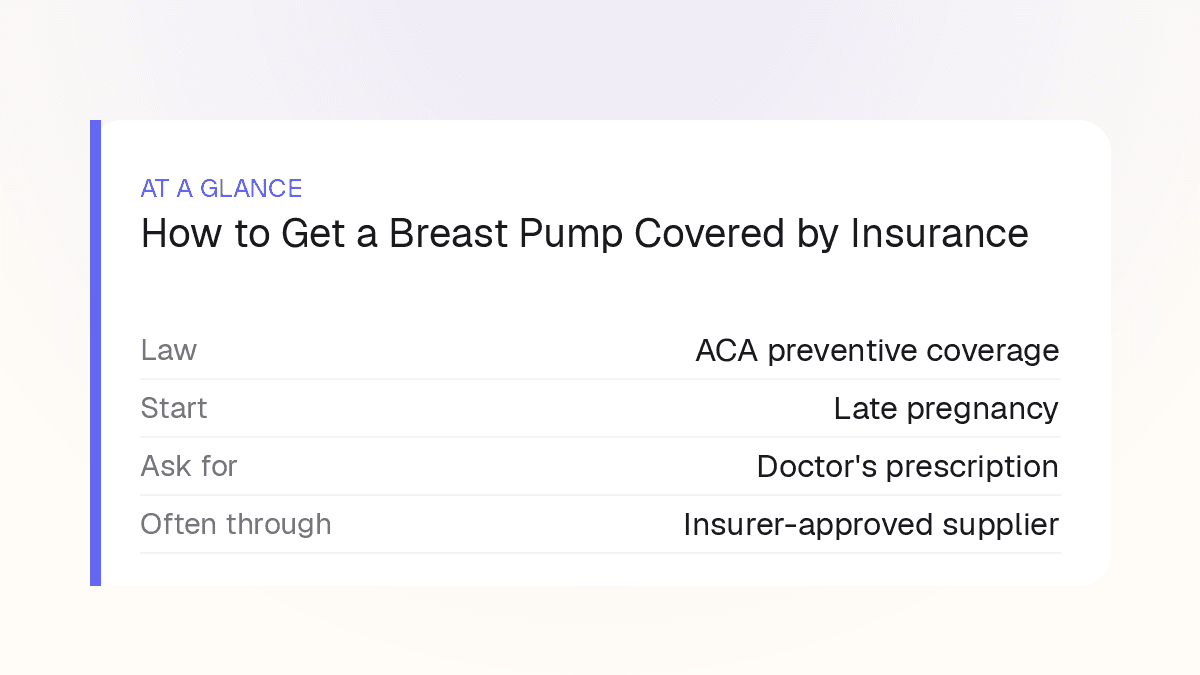
Wondering how to get a breast pump covered by insurance? Under the Affordable Care Act (ACA), most non-grandfathered health plans must cover breastfeeding support and equipment, which commonly includes a breast pump, at no out-of-pocket cost. The catch is that each plan sets its own process, so a little planning before the baby arrives goes a long way.
What the ACA generally requires
The ACA lists breastfeeding support, counseling and supplies as a preventive service for women. In practice, that means many plans cover either a new pump or a rental of a hospital-grade pump. Details differ: which models are covered, whether it is a manual or electric pump, how often you can get a new one, and whether you must use in-network suppliers. Grandfathered plans and some other coverage types may not follow these rules, so always confirm with your insurer. Medicaid and CHIP coverage varies by state; see our guide to adding a newborn to Medicaid or CHIP for related basics.
Official source
Step by step: getting your pump
1. Call your insurer in the second or third trimester
Ask: Is a breast pump covered? Manual, electric, or both? Do I need a prescription? Which suppliers are in network? Can I order before delivery, and when does coverage start? Many plans let you order a few weeks before your due date.
2. Get a prescription if required
Many suppliers need an order from your OB-GYN, midwife or pediatrician. Ask for it at a prenatal visit so it is ready when you are.
3. Choose an approved supplier
Plans often route you to specific durable medical equipment (DME) suppliers or online pump stores. Using an out-of-network supplier can mean paying out of pocket, so check first. Compare which models each supplier offers, since the selection can differ.
4. Keep the paperwork
Save your order confirmation, the prescription, and any claim numbers. If you buy a pump yourself, ask whether your plan reimburses purchases and what receipts it needs.
If your pump is denied or not fully covered
- Ask why. Common reasons are a missing prescription, an out-of-network supplier, or ordering too early.
- Use the appeals process. Your plan must explain how to appeal a denial, and many states offer an independent external review.
- Check other options. WIC programs in some areas loan or provide pumps; our WIC guide covers who may qualify.
- Consider flexible spending. A health FSA or HSA can often be used for pump supplies, but confirm what your plan allows.
Timing tip
Common questions
Can I get a new pump with each pregnancy?
Often yes, but many plans limit how frequently a pump is replaced. Ask your insurer about its replacement schedule.
Is a hospital-grade pump covered?
Some plans cover rentals when there is a medical reason, such as a premature baby. A clinician usually has to document that need.
Does insurance cover lactation consultants?
ACA plans generally cover breastfeeding counseling, sometimes with in-network providers only. Verify before booking.
Key takeaways
- Most non-grandfathered plans must cover breastfeeding support and equipment; details vary by plan.
- Call your insurer in late pregnancy to learn the supplier, prescription and timing rules.
- Use an in-network supplier and keep every order and claim document.
- If denied, ask why and use the appeals process before paying out of pocket.
FirstDays turns the newborn to-do list, including insurance steps, into a personalized checklist with reminders. Browse the state guides or start free.
Get your personalized checklist — free
FirstDays builds a deadline-aware checklist for your state, reminds you before every window closes, and drafts the letters and forms for you. Free to start.
Build my checklist →