How to Replace a Lost or Damaged Birth Certificate
Published November 12, 2026
If you need to replace a lost or damaged birth certificate, the good news is that the record itself is not lost — your state still has it on file. You simply request a new certified copy from the office that issued it. This guide walks through where to apply, what to bring, and how to avoid the most common mistakes.
Where to order a replacement
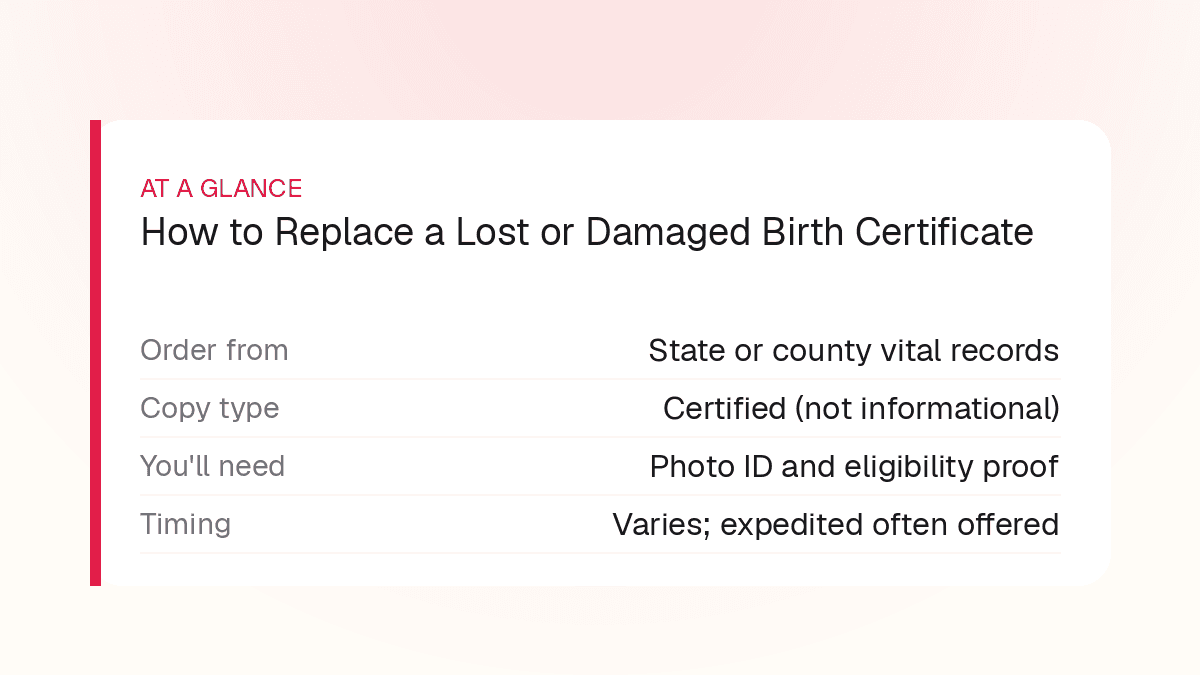
Birth records are held by the vital records office of the state (sometimes the county) where the baby was born — not where you live now. The CDC keeps a directory of state vital records offices that links to each official site. Many states take requests online through the state itself or an approved vendor, by mail, or in person.
Use the official source
What you will usually need
- An application form naming the person on the certificate: full name, date and place of birth, and parents' names.
- Valid photo ID for the person ordering, such as a driver's license or passport.
- Proof you are eligible. Most states limit copies to the person named, parents listed on the record, or legal representatives. Rules differ by state.
- Payment. Fees and processing times vary widely, so check the current amounts on the official site.
If you do not have photo ID, many offices accept alternatives or a notarized request. Ask the office what it accepts rather than guessing.
Step by step
1. Confirm you need a certified copy
Passports, Social Security, insurance and school enrollment generally require a certified copy, not an informational one. See certified vs. informational birth certificates so you order the right type.
2. Choose how to apply
Online is usually the easiest, mail is often cheapest, and in-person visits can sometimes get same-day service. Many offices offer expedited processing or shipping for an extra fee if you are up against a deadline, such as a passport appointment.
3. Order more than one
Extra copies are typically cheaper when ordered together, and different agencies may want an original at the same time. Keeping a spare avoids repeating this process.
4. Check it when it arrives
Look over names, dates and spellings right away. If you spot an error, contact the vital records office about the correction (amendment) process — it is separate from a replacement. If the original application was never filed, our guide to getting a birth certificate for a newborn covers the first-time process.
Damaged certificates and other special cases
A torn, water-damaged, faded or laminated certificate may be rejected by agencies even if it is still readable. Treat it as unusable for official purposes and order a fresh certified copy. If a document was stolen, you may also want to monitor for identity misuse; the Federal Trade Commission's IdentityTheft.gov explains general steps. For a baby born abroad or on a military base, the issuing office may be the State Department or another agency, so confirm with the official source.
Keep it safe next time
Common questions
How long does a replacement take?
It ranges from same-day in person to several weeks by mail, depending on the state and time of year. Check the office's current estimate and consider expedited options for urgent needs.
Can I use a photocopy in the meantime?
Generally not for official purposes. Agencies usually want the certified original, so plan extra time before any deadline.
Key takeaways
- Your birth record is still on file — order a new certified copy from the issuing state or county vital records office.
- Bring photo ID and proof you are eligible to order; rules and fees vary by state.
- Use official state sites or the CDC directory to avoid look-alike sites with inflated fees.
- Order a spare copy and store certified copies safely, unlaminated.
FirstDays keeps your newborn's paperwork organized with a personalized checklist and reminders for your state — see the state guides and start free.
Get your personalized checklist — free
FirstDays builds a deadline-aware checklist for your state, reminds you before every window closes, and drafts the letters and forms for you. Free to start.
Build my checklist →