Car Seat Rules for Bringing Baby Home From the Hospital
Published November 13, 2026

The car seat for bringing baby home from the hospitalis one of the few items you truly can't skip. Most US hospitals ask whether you have a properly installed seat before they discharge a newborn, and every state has child passenger safety laws. This guide covers the basics so the ride home is one thing you don't have to worry about.
What hospitals actually check
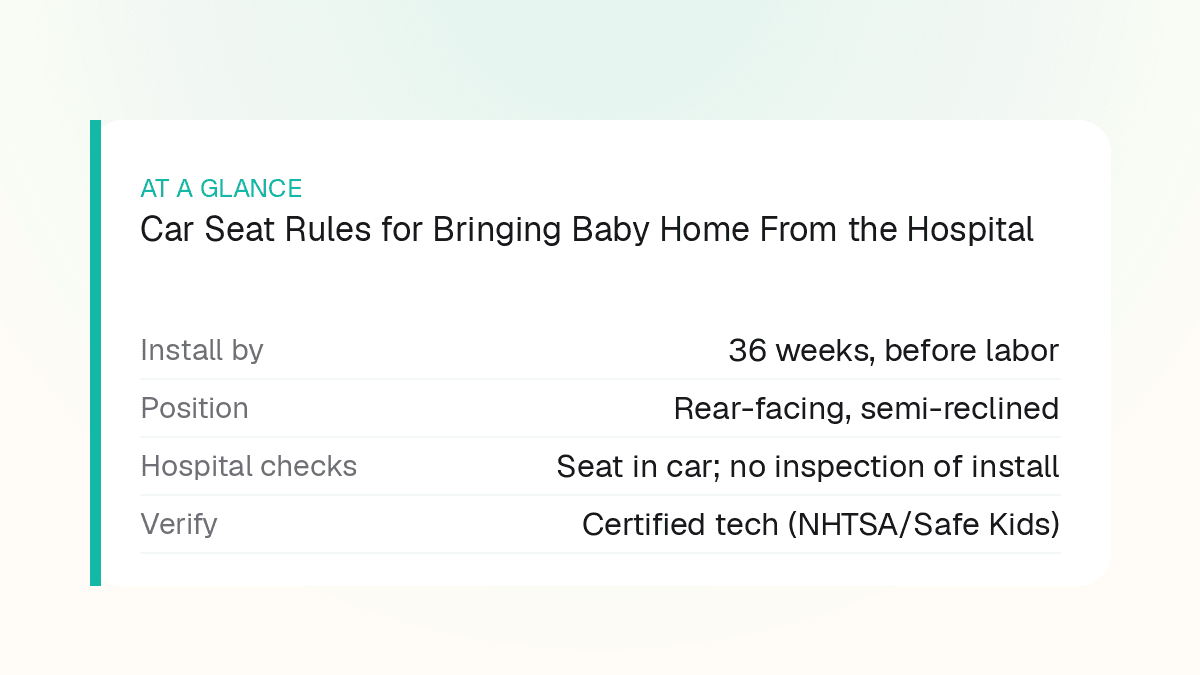
Policies vary by hospital, but staff commonly ask whether you have a car seat and may watch you buckle the baby in at discharge. Many hospitals will not inspect or install the seat in your car for you, and some will hold off on discharge if there's no seat at all. Check your hospital's policy when you pre-register, and ask whether they offer a car seat check or can point you to a local one.
Choosing and installing an infant seat
- Pick a seat that fits newborns. Check the manufacturer's minimum weight and height limits, and confirm the seat hasn't expired — most list an expiration date on a label.
- Buy new when you can. A used seat may have been in a crash or be missing parts; if you do accept one, you need its full history.
- Use rear-facing. The American Academy of Pediatrics advises keeping children rear-facing until they reach the maximum height or weight allowed by their seat.
- Follow both manuals. Read the seat manual and your vehicle's owner manual for where and how to install, using either the seat belt or the LATCH system as directed.
- Check the recline and harness. The newborn should sit at the recommended angle, with harness straps at or below the shoulders when rear-facing and snug enough that you can't pinch webbing.
Get it checked by a certified technician
When to get it done
Aim to have the seat purchased and installed by about 36 weeks, since babies can arrive early. Put the seat base in the car you'll use for the ride home, practice buckling a doll or stuffed toy, and pack the details in your hospital bag checklist — such as a reminder of who is driving. If you may use multiple vehicles, a taxi or rideshare, ask a technician about the safest way to install in each.
Small things that matter at discharge
- Dress baby in thin layers; bulky clothing or coats can leave harness straps too loose. Use a blanket over the buckled harness instead.
- Don't add aftermarket pads, inserts, or toys unless the seat maker approves them.
- Know your state's child restraint law — search for your state on the Governors Highway Safety Association or your state DMV site, since age and size rules differ.
This is general information, not safety certification for your specific seat or vehicle. Always follow the manufacturer's instructions and confirm with a certified technician. Our state guides and pre-baby checklist help you keep the rest of the to-do list in view too.
Key takeaways
- Hospitals commonly expect a car seat at discharge — confirm your hospital's policy.
- Use a newborn-appropriate, unexpired, rear-facing seat and follow both manuals.
- Install by around 36 weeks and have a certified technician verify it.
- Avoid bulky clothing and unapproved add-ons in the seat.
Car seat sorted? FirstDays tracks the rest — birth certificate, Social Security number, insurance enrollment — with reminders before each deadline. Start free.
Get your personalized checklist — free
FirstDays builds a deadline-aware checklist for your state, reminds you before every window closes, and drafts the letters and forms for you. Free to start.
Build my checklist →